
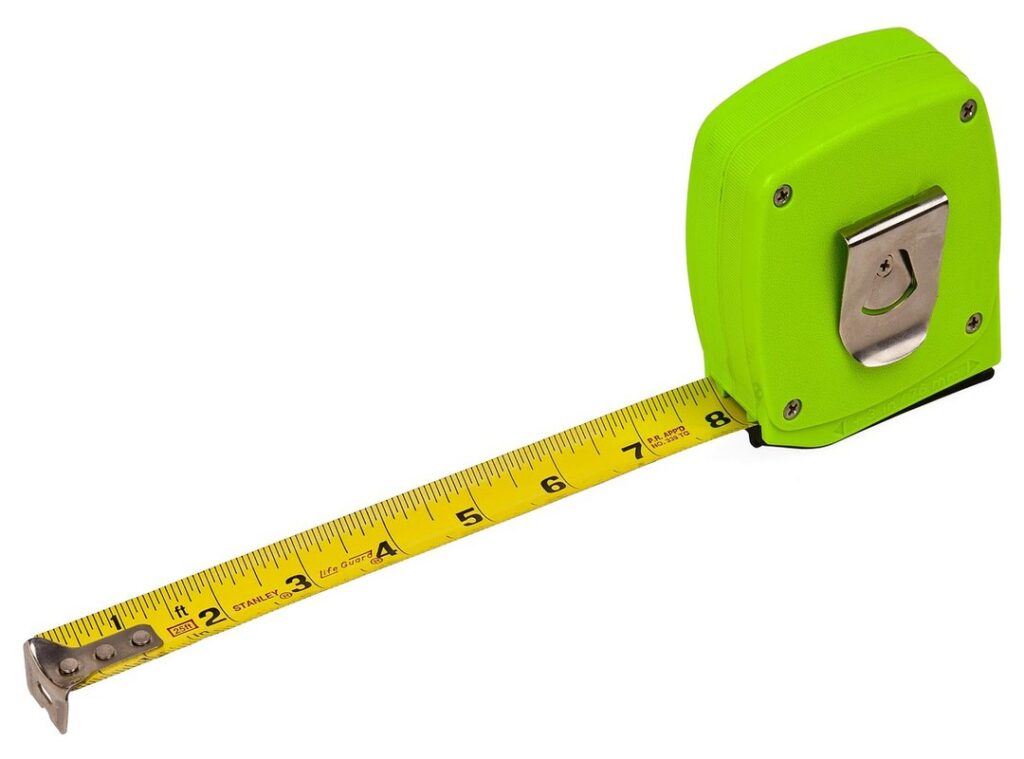
6.9 inches is equal to 17.526 centimeters.
I’m here to give you the answer and show you how to convert inches to centimeters yourself. It’s a useful skill, especially in our globalized world. Whether you’re shopping online or working on a DIY project, knowing both imperial and metric systems can be a real lifesaver.
This guide will walk you through the process step-by-step. I’ll use practical examples and tips to make sure you can do it on your own. Trust me, the math is simple and easy to master.
The Core Formula: Understanding the Inch to Centimeter Relationship
Let’s get straight to it. The universal conversion factor is 1 inch = 2.54 centimeters. This is the international standard, ensuring accuracy and consistency in all measurements.
Centimeters = Inches × 2.54.
Now, let’s apply this to 6.9 inches.
6.9 inches × 2.54 = 17.526 cm.
This formula is the only tool you need for any inch-to-cm conversion. It’s simple and easy to remember.
Imagine holding a ruler. You can almost feel the smooth surface and see the tiny markings. Each inch, each centimeter, is precisely defined.
It’s like having a secret code that unlocks the language of measurements.
The history behind this standard is fascinating. It was established to create a uniform system across different countries. But that’s a story for another time.
So, next time you need to convert inches to centimeters, just remember: Inches × 2.54.
A Step-by-Step Walkthrough: How to Calculate the Conversion Manually

Start with your value in inches, and in this case, it is 6.9.
- Step 1: Start with your value in inches. In this case, it is 6.9.
- Step 2: Identify the magic conversion number, which is 2.54.
- Step 3: Set up the multiplication problem: 6.9 * 2.54.
- Step 4: Perform the calculation. Use a calculator or do it by hand, showing the result: 17.526.
- Step 5: Always add the correct unit to your answer. The final result is 17.526 centimeters (cm). This prevents confusion.
For a quick mental estimate, you can multiply the inches by 2.5. For 6.9, this gives 17.25, which is very close to the exact answer and useful for quick checks.
Converting 6.9 inch to cm feels like a small victory, doesn’t it? It’s like solving a tiny puzzle.
Practical Uses: Where You’ll Encounter a 6.9-Inch Measurement
You might think 6.9 inches is just another random number, but it’s more common than you’d imagine. For instance, in consumer electronics, 6.9 inches is a very common screen size for large smartphones or ‘phablets’.
Tech specs often use inches, but comparing with international products requires knowing the cm equivalent. 6.9 inch to cm is about 17.53 cm. This conversion is crucial when you’re shopping online and need to compare sizes. Discapitalied
In e-commerce, product dimensions are everything. A package, a book, or a piece of equipment might be listed as 6.9 inches tall or wide. Knowing the cm value helps visualize its size, especially for international buyers.
Hobbyists, like those into sewing, woodworking, or 3D printing, often need precise measurements. Converting between inches and cm is a daily task for many. It’s not just about getting the right fit; it’s about making sure your project looks and functions exactly as intended.
Personal height or object measurements can also result in a 6.9-inch figure. While less common for height, measuring items for shipping or fitting into spaces might yield this measurement.
To help you conceptualize, 6.9 inches is slightly longer than a standard US dollar bill or about the height of a common paperback book. So, next time you see this measurement, you’ll have a better idea of what it means.
Common Questions About Inch and Centimeter Conversions
Q1: How do you convert centimeters back to inches? Just divide the centimeter value by 2.54, and easy, right?
Q2: Is a centimeter larger or smaller than an inch?
A centimeter is smaller. Think of it this way: about 2.5 cm fit into one inch.
It’s like comparing a mini car to a full-size SUV.
Q3: What is 6.9 inches in a fraction?
6.9 inches is 6 and 9/10 inches. This is super helpful if you’re working with fractional measurements. (Who knew fractions could be so practical?)
Q4: How accurate do I need to be?
For everyday use, rounding 17.526 cm to 17.5 cm is just fine. But for scientific or technical work, using the full value is crucial.
You don’t want to be that person who built a bridge that’s off by a few millimeters. (Oops!)
Q5: What are some other common inch conversions?
Sure, here are a couple:
1. 6 inches = 15.24 cm
2. 7 inches = 17.78 cm
And if you ever need to convert 6.9 inch to cm, just remember it’s about 17.526 cm. (Now you can impress your friends at the next trivia night!)
You’re Now a Measurement Conversion Pro
The most critical piece of information is the conversion factor: 1 inch equals 2.54 centimeters. This simple ratio is the key to converting any measurement from inches to centimeters. 6.9 inches to cm is 17.526 cm, providing a precise and accurate conversion.
You now have the knowledge and the method to convert any inch measurement to centimeters with confidence. Just remember to multiply the number of inches by 2.54. Bookmark this page or keep the simple multiplication step in mind for future use.
Simple math can indeed solve everyday practical problems, making your life easier.
 Wandaneliah Kilgore writes the kind of expert financial advice content that people actually send to each other. Not because it's flashy or controversial, but because it's the sort of thing where you read it and immediately think of three people who need to see it. Wandaneliah has a talent for identifying the questions that a lot of people have but haven't quite figured out how to articulate yet — and then answering them properly.
They covers a lot of ground: Expert Financial Advice, Capital Markets Updates, Personal Finance Insights, and plenty of adjacent territory that doesn't always get treated with the same seriousness. The consistency across all of it is a certain kind of respect for the reader. Wandaneliah doesn't assume people are stupid, and they doesn't assume they know everything either. They writes for someone who is genuinely trying to figure something out — because that's usually who's actually reading. That assumption shapes everything from how they structures an explanation to how much background they includes before getting to the point.
Beyond the practical stuff, there's something in Wandaneliah's writing that reflects a real investment in the subject — not performed enthusiasm, but the kind of sustained interest that produces insight over time. They has been paying attention to expert financial advice long enough that they notices things a more casual observer would miss. That depth shows up in the work in ways that are hard to fake.
Wandaneliah Kilgore writes the kind of expert financial advice content that people actually send to each other. Not because it's flashy or controversial, but because it's the sort of thing where you read it and immediately think of three people who need to see it. Wandaneliah has a talent for identifying the questions that a lot of people have but haven't quite figured out how to articulate yet — and then answering them properly.
They covers a lot of ground: Expert Financial Advice, Capital Markets Updates, Personal Finance Insights, and plenty of adjacent territory that doesn't always get treated with the same seriousness. The consistency across all of it is a certain kind of respect for the reader. Wandaneliah doesn't assume people are stupid, and they doesn't assume they know everything either. They writes for someone who is genuinely trying to figure something out — because that's usually who's actually reading. That assumption shapes everything from how they structures an explanation to how much background they includes before getting to the point.
Beyond the practical stuff, there's something in Wandaneliah's writing that reflects a real investment in the subject — not performed enthusiasm, but the kind of sustained interest that produces insight over time. They has been paying attention to expert financial advice long enough that they notices things a more casual observer would miss. That depth shows up in the work in ways that are hard to fake.