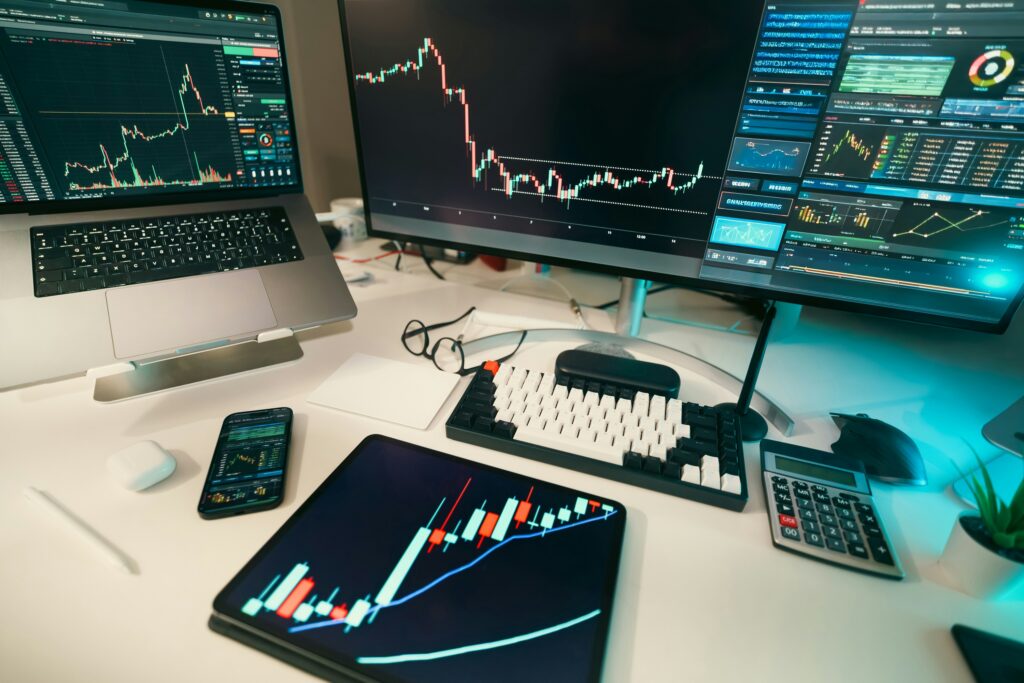
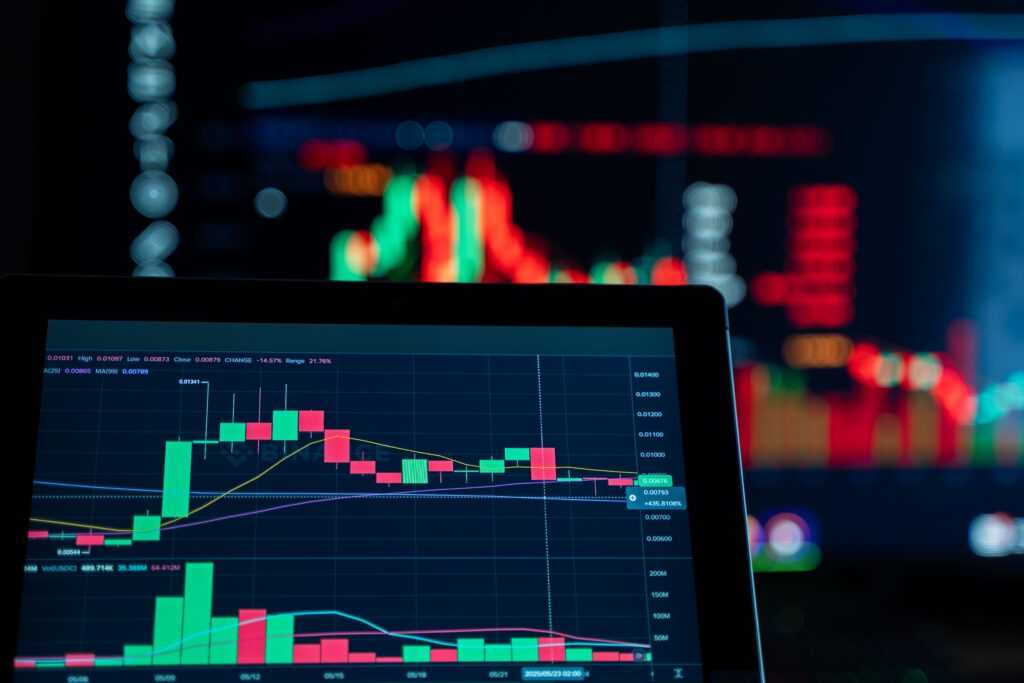
Every active trader remembers a session where the screen moved faster than their thinking. Spreads widened without warning, a hedge stopped behaving the way the model said it would, and a position that looked balanced at the open had turned into an open question by lunch. Volatility does that. It does not simply move prices around, it corrodes the confidence you had in your assumptions about those prices, and it does so at exactly the moment you need those assumptions most.
The instinct in those sessions is to reach for conviction: a stronger view, a bolder call, a bigger size to make back what slipped away. Traders who come through repeated turbulence intact tend to reach for something far less romantic. They want to know what their exposure is right now rather than at yesterday’s close, they want the plumbing between a decision and a filled order to be quick and predictable, and they want a number on the table that tells them when to stop.
That pairing of execution technology with honest risk measurement is what separates managing volatility from merely enduring it. Neither half does much alone. Fast fills on a book nobody is measuring is just efficient risk-taking, and a beautiful risk dashboard attached to slow, leaky execution will watch losses accumulate in high resolution.
Volatility Is a Measurable Signal, Not Just a Mood
Before volatility can be managed it has to be quantified, and option prices do that job better than sentiment surveys. The Cboe Volatility Index, derived from S&P 500 option prices, has served since 1993 as a market-implied estimate of near-term turbulence, and its term structure carries information that a single spot reading does not. When near-dated implied volatility trades well above longer expirations, the market is pricing an event, not a regime. When the curve flattens or inverts, something structural is being repriced.
Skew adds another layer. The relative cost of downside puts against at-the-money calls tells you how much participants are paying for crash protection, and extremes in that measure have historically lined up with periods when correlations tighten and diversification quietly stops working. None of this predicts direction. It does tell you how wide the distribution of outcomes has become, which is precisely the input that position sizing needs. A useful companion read on how those pressures compound is this breakdown of capital markets volatility during economic downturns, which walks through how asset classes behave once liquidity thins out.
Execution Technology Decides What a Strategy Actually Earns
A strategy’s backtest assumes fills. Live markets do not. In volatile conditions the gap between the price you modeled and the price you received widens fast, and that slippage compounds across every rebalance, every roll, every leg of a spread. Multi-leg options orders are especially unforgiving, since legging into a position while implied volatility is moving can turn a defined-risk trade into something quite different from what was intended.
This is where routing logic, co-location, and smart order handling stop being infrastructure trivia and start being performance. It is also where supervision matters. FINRA’s guidance on supervision and control practices for algorithmic trading strategies sets out expectations that firms test code before production, segregate testing from live environments, keep a mechanism to disable an algorithm quickly, and monitor downstream market impact. Those practices read like compliance obligations, and they are, but they double as a checklist for anyone who would rather not have an automated strategy misbehaving during the worst five minutes of the quarter.
Real-Time Analytics Turn Exposure Into Something You Can Steer
Position-level detail is comforting and frequently misleading. What matters in a fast market is the aggregate: net delta across the book, where gamma concentrates as spot moves, how much vega sits in expirations that are about to get repriced. A trader who can only see those figures overnight is managing yesterday’s portfolio, and in a volatile week yesterday’s portfolio may not resemble today’s at all.
Modern systems close that gap by recomputing risk continuously against live prices and running stress scenarios on demand, so a question like what happens to this book if the index drops four percent and volatility gains eight points gets answered in seconds instead of hours. Firms running real size at this level typically consolidate pricing, analytics, and order flow onto a single algorithmic stock and options trading platform rather than stitching together feeds that quietly disagree with each other. Consistency between the model that prices a trade and the model that measures it afterward is not a technical nicety, it is what keeps a hedge honest.
Risk Management Is the Other Half of the System
Automation changes the shape of risk rather than removing it. The Bank for International Settlements, reviewing electronic trading and market structure, found that electronification generally improves market quality but flagged exceptions worth taking seriously: liquidity may have become less robust, and prices more sensitive to order flow imbalances. Translated into practice, the venues you depend on can be thinner than their quoted depth suggests at exactly the moment you want to cut exposure.
Good systems assume this. Pre-trade credit and size checks reject the fat-finger order before it reaches an exchange, position limits throttle a strategy that starts scaling in the wrong direction, and a documented kill switch gives a human a way to halt everything without improvising. Equally important is the unglamorous discipline of deciding in advance what level of drawdown triggers a reduction, then letting the system enforce it at the moment judgment is least reliable.
Volatility rewards preparation far more than prediction. The traders who handle it well are rarely the ones with the sharpest macro view; they are the ones whose measurement, execution, and limits were already wired together before the market started moving.
That integration is the real project. Pick instruments that let you read implied volatility and its structure clearly, insist on execution you can model and audit, run risk against live prices rather than stale snapshots, and write down your limits while markets are calm enough for you to mean them. None of those steps is exotic, and every one of them is easier to build in a quiet month than a loud one.
What you get in return is not immunity from drawdowns. It is a narrower band of outcomes, fewer decisions made under adrenaline, and a portfolio that comes out of the turbulent stretch with enough capital and composure to act on whatever follows. In markets that reprice this quickly, that is a durable edge.
 Sandra H. has opinions about investment strategies and tips. Informed ones, backed by real experience — but opinions nonetheless, and they doesn't try to disguise them as neutral observation. They thinks a lot of what gets written about Investment Strategies and Tips, Market Analysis and Trends, Expert Financial Advice is either too cautious to be useful or too confident to be credible, and they's work tends to sit deliberately in the space between those two failure modes.
Reading Sandra's pieces, you get the sense of someone who has thought about this stuff seriously and arrived at actual conclusions — not just collected a range of perspectives and declined to pick one. That can be uncomfortable when they lands on something you disagree with. It's also why the writing is worth engaging with. Sandra isn't interested in telling people what they want to hear. They is interested in telling them what they actually thinks, with enough reasoning behind it that you can push back if you want to. That kind of intellectual honesty is rarer than it should be.
What Sandra is best at is the moment when a familiar topic reveals something unexpected — when the conventional wisdom turns out to be slightly off, or when a small shift in framing changes everything. They finds those moments consistently, which is why they's work tends to generate real discussion rather than just passive agreement.